Judaism
Judaism
Judaism is the faith practiced by the Jewish people. The roots of this religion can be traced to Prophet Yaqub, also known as Jacob, who was the father of twelve sons. These sons became the ancestors of the twelve tribes of Israel. Among them, Judah holds particular importance, as the name "Judaism" is derived from his lineage. The connection to Judah highlights his significant role in shaping the identity and history of the Jewish people.
Judah’s Influence and the Evolution of Judaism
Although Judaism is frequently linked to the religious traditions established by Ibrahim (Abraham) and Moses, it is important to recognize that the faiths practiced by Ibrahim and Moses were not specifically referred to as Judaism. Rather, their teachings, like those of other messengers, centered on the message of submitting to the will of God.
Jews are
The Old Testament: Sacred Texts of Judaism
The Old Testament is regarded by Jews as the word of God. It serves as the foundational scripture for the Jewish faith, encompassing the teachings, laws, and history central to Judaism.
Divisions of the Old Testament
The Old Testament is divided into three main sections:
· The Torah: The Torah consists of the first five books of the Old Testament. These books are considered the most sacred and contain the core laws and teachings given to the Jewish people.
· The Nevi'im: Known as the books of the prophets, the Nevi'im include the writings and messages delivered by God's prophets throughout Jewish history.
The Ketuvim: The Ketuvim are other writings included in the Old Testament. They encompass a variety of texts, such as poetry, wisdom literature, and historical accounts. Monotheism in Judaism: The Oneness of God in the Hebrew Bible
Judaism is founded upon pure and uncompromising monotheism—the belief that God is absolutely one, unique, and without partner. This principle is not a later theological development; rather, it is explicitly and repeatedly stated throughout the Hebrew Bible (Old Testament).
At the heart of Jewish belief is the Shema, the central declaration of faith:
“Hear, O Israel: The LORD our God, the LORD is One.” (Deuteronomy 6:4)
This verse affirms that God is singular in essence, authority, and worship. The Hebrew Scriptures consistently emphasize that no other being shares God’s divinity. God alone is sovereign over heaven and earth:
“The LORD, He is God; there is none else besides Him.” (Deuteronomy 4:35)
The Books of the Prophets reiterate this message with unmistakable clarity. God declares through Isaiah:
“I am the LORD, and there is no other; besides Me there is no God.” (Isaiah 45:5)
These statements leave no room for divided godhood, multiple persons, or shared divine status. The Hebrew Bible further distances God from human attributes or incarnation:
“God is not a man… nor a son of man.” (Numbers 23:19)
God alone is the Creator, acting without helper or intermediary:
“I am the LORD, who made all things… by Myself.” (Isaiah 44:24)
This exclusive monotheism extends beyond Israel to all humanity:
“Has not one God created us?” (Malachi 2:10)
The Hebrew Bible envisions a time when this truth will be universally acknowledged:
“On that day the LORD will be One and His name One.” (Zechariah 14:9)
In summary, Judaism, as articulated in the Hebrew Bible, teaches absolute monotheism: one God, without partner, without incarnation, and without division. This foundational teaching shaped Jewish belief and worship and stands as one of the clearest affirmations of monotheism in religious history.
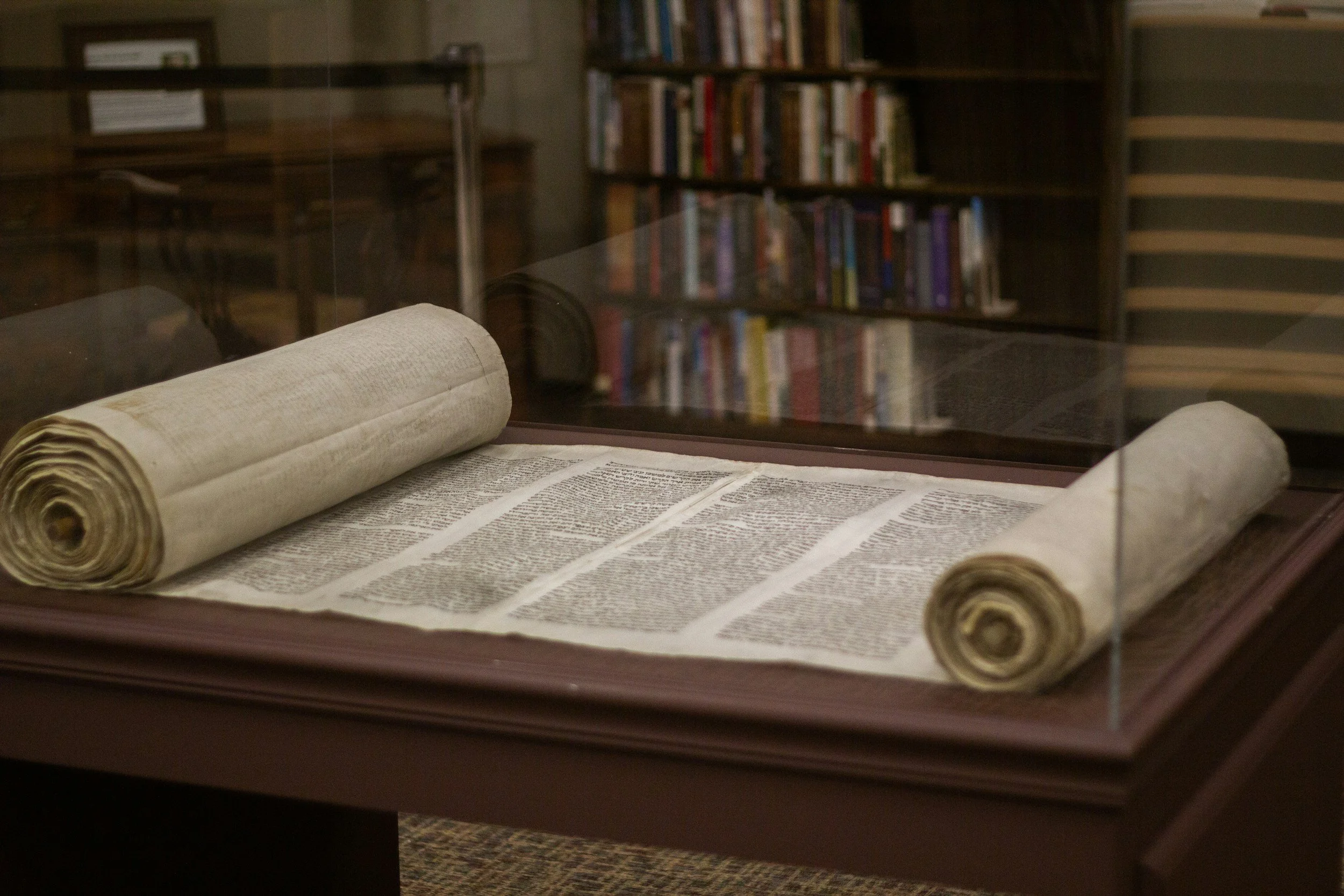
The sacred book of Judaism is the Torah.
The Torah
· The Torah is the central and most sacred text in Judaism.
· It consists of the first five books of the Hebrew Bible:
1. Genesis (Bereshit)
2. Exodus (Shemot)
3. Leviticus (Vayikra)
4. Numbers (Bamidbar)
5. Deuteronomy (Devarim)
· Jews believe the Torah was revealed by God to Prophet Moses (Musa عليه السلام) at Mount Sinai.
Other Important Jewish Texts
While the Torah is the most sacred, Judaism also includes other key scriptures:
· Tanakh – The Hebrew Bible
o Torah (Law)
o Nevi’im (Prophets)
o Ketuvim (Writings)
· Talmud – A vast collection of rabbinic discussions, explanations, and legal interpretations of the Torah
o Includes Mishnah and Gemara
Inte3restingly in Tanakh the coming of prophet Muhammad is prophesized in multiple places.
Prophesy. 1.
Deuteronomy 18:18 I will raise them up a Prophet from among their brethren, like unto thee, and will put my words in his mouth; and he shall speak unto them all that I shall command him.
19 And it shall come to pass, that whosoever will not hearken unto my words which he shall speak in my name, I will require it of him.
Each point referenced in this prophecy will be addressed individually in the following discussion.
1. among their brethren
2. like unto thee,
3. will put my words in his mouth
4. he shall speak unto them all that I shall command him.
5. And it shall come to pass, that whosoever will not hearken unto my words which he shall speak in my name, I will require it of him.
The Christians say that this prophecy refers to Jesus (PBUH) because Jesus (PBUH) was like Moses (PBUH). Moses (PBUH) was a Jew, and Jesus (PBUH) was a Jew. Moses (PBUH) was a Prophet, and Jesus (PBUH) was also a Prophet.
Suppose these two are the only criteria for this prophecy to be fulfilled. In that case, all the Prophets of the Bible came af- ter Moses (PBUH), such as Solomon, Isaiah, Ezekiel, Daniel, Hosea, Joel, Malachi, John the Baptist, etc. (but) will fulfill this prophecy since all were Jews as well as prophets.
Let’s take the prophecy and dissect it statement by statement.
1. among their brethren
“Children” vs. “Brethren” in the Bible: A Lineage-Based Distinction
In the Bible, terminology is precise when referring to lineage. The descendants of Jacob (Israel) are consistently called “the children of Israel”, not “brethren.” This distinction is deliberate and important when identifying the origin of prophets and messengers.
1. Descendants of Jacob Are Called “Children,” Not Brethren
Throughout the Old Testament, those who descend from Jacob are described as children (sons):
· “The children of Israel” (Exodus 1:7, Exodus 2:23, Leviticus 26:46)
· “Speak to the children of Israel” (Deuteronomy 6:1)
· “Hear, O Israel” (Deuteronomy 6:4)
Any prophet arising from within Jacob’s lineage is therefore sent to the children, not referred to as their “brother”.
The Term “Brethren” Refers to a Related but Distinct Lineage
In contrast, the Bible uses “brethren” to denote descendants of a related family line, not the same direct lineage. Specifically, the brethren of the Israelites trace back to Ishmael, the son of Abraham and brother of Isaac.
A Prophet “From Among Their Brethren” Cannot Be Israelite
Moses makes a famous prophecy:
· “The LORD your God will raise up for you a Prophet like me from among your brethren.”
(Deuteronomy 18:18)
If this prophet were from the Israelites themselves, the verse would say from among your children or from among you, as is the norm elsewhere. Instead, “brethren” is used, indicating a prophet from a parallel Abrahamic lineage, not from Jacob.
Ishmael Is the Only Applicable “Brother Line”
Isaac’s only brother was Ishmael (Genesis 16–21). The Ishmaelites therefore constitute the brethren of the Israelites, not their children.
· Ishmael: son of Abraham
· Isaac: son of Abraham
· Jacob (Israel): son of Isaac
· Muhammad ﷺ: descendant of Ishmael
Thus, a prophet arising from the descendants of Ishmael fits precisely the Biblical phrase “from among your brethren.”
2. like unto thee
Similarities of Prophet Muhammad (PBUH) with Moses (PBUH):
1. Both had a father and a mother, while Jesus (PBUH) was born miraculously without any male intervention.
2. Both were married and had children. Jesus (PBUH), according to the Bible, did not marry nor have children.
3. Both died natural deaths. Jesus (PBUH) has been raised alive. (Quran 4:157-158) Mark 16:6“You seek Jesus of Nazareth… He has risen; he is not here.”
4. Prophet Moses fought wars; Muhammad (PBUH) fought wars.
5. Another family raised Moses; Muhammad (PBUH) was raised by another family
6. Prophet Moses brought the Torah himself, and Muhammad (PBUH) brought the Qur’an.
7. Prophet Moses (PBUH) worked as a shepherd, and Muhammad (PBUH) worked as a Shepherd.
8. Prophet Moses (PBUH) was triumphant over his enemies, and Muhammad (PBUH) was triumphant over his enemies.
9. Prophet Moses (PBUH) was dead and buried, Muhammad (PBUH) was dead and buried.
10. Prophet Moses (PBUH) fled persecution with his people at one point, and Muhammad (S.A.W) fled persecution with his people at one point.
11. Prophet Moses (PBUH) brought new laws, and Muhammad (PBUH) brought new laws.
3. “will put my words in his mouth”
“Putting Words in the Mouth” — Meaning in Scripture
In biblical language, the expression “putting words in the mouth” refers to a very specific mode of revelation:
God places His exact words upon a prophet, who then recites them verbatim, not speaking from his own ideas or interpretations.
This concept aligns perfectly with the nature of revelation in Islam. Prophet Muhammad ﷺ did not compose the Qur’an; rather, he recited every verse exactly as commanded by Allah through the angel Jibrīl (Gabriel). The Qur’an itself emphasizes this divine, word-for-word transmission.
The Qur’an Affirms Muhammad’s ﷺ Role as a Messenger Reciting God’s Words
The Qur’an consistently teaches that the Prophet ﷺ does not speak from personal desire, and that what he delivers is the direct speech of God:
“Nor does he speak from his own desire. It is only a revelation revealed.”
(Qur’an 53:3–4)
One clear and simple example of this divine speech is Surah al-Ikhlāṣ, a chapter revealed in response to a theological question:
Say, [O Prophet],
‘He is Allah—One and Indivisible.
Allah—the Self-Sufficient, needed by all.
He neither begets nor is born.
And there is none comparable to Him.’
(Qur’an 112:1–4)
Notice the opening command: “Say…” (Qul).
This is the Qur’an’s built-in proof that Muhammad ﷺ was reciting, not authoring. He was instructed to repeat the words exactly as they were revealed.
A Strong Point of Authenticity
It is also important to note that no Arabic translation of the Bible existed during the time of Prophet Muhammad ﷺ. Yet the Qur’an contains a pure, uncompromising declaration of monotheism that mirrors what God revealed to earlier prophets—showing that it was not borrowed, adapted, or influenced by outside sources.
Contrast with the New Testament Gospels
The New Testament gospels, by contrast:
· Do not claim to be verbatim words that God put into Jesus’s mouth,
· Were written decades after Jesus,
· And primarily narrate events, teachings, and sayings as remembered and transmitted by the gospel writers.
They document Jesus’s life, but they are not presented as a direct, word-for-word revelation from God to Jesus in the way Deuteronomy describes.
Only the Qur’an fits the biblical model of a prophet who speaks exactly what God puts in his mouth.
4. “he shall speak unto them all that I shall command him”
“He shall speak unto them all that I shall command him” —
This means the coming prophet will not speak from himself, but will recite only what God commands—word for word.
This Description Perfectly Fits Prophet Muhammad ﷺ
Islamic scripture repeatedly emphasizes that the Prophet Muhammad ﷺ never spoke on his own authority. He conveyed only what Allah revealed to him, exactly as the verse in Deuteronomy describes.
The Qur’an Confirms This Clearly
1. Muhammad ﷺ does not speak from his own desire
“Nor does he speak from [his own] desire. It is not but a revelation revealed.”
(Qur’an 53:3–4)
2. He only conveyed what Allah commanded him
“I only follow what is revealed to me.”
(Qur’an 6:50)
“This (Qur’an) is a revelation sent down from the Lord of all worlds. The Trustworthy Spirit has brought it down to your heart (O Muhammad), so that you may be one of the warners.”
(Qur’an 26:192–194)
3. He was ordered strictly not to change or add anything
“Say: It is not for me to change it on my own. I only follow what is revealed to me.”
(Qur’an 10:15)
18:19 “And it shall come to pass, that whosoever will not hearken unto my words which he shall speak in my name, I will require it of him.”
— Deuteronomy 18:19 Explained
After describing the coming prophet in Deuteronomy 18:18, God adds a strong warning in the next verse:
What This Means
1. The prophet will speak God’s words — not his own.
2. Rejecting this prophet is equivalent to rejecting God Himself.
3. God will hold accountable anyone who refuses to follow him.
This is not a casual suggestion — it is a divine command to obey the prophet described in verse
Prophecy 2.
Deuteronomy 33: 2 “And he said, The Lord came from Sinai, and rose up from Seir unto them; he shined forth from mount Paran, and he came with ten thousands of saints: from his right hand went a fiery law for them.3 Yea, he loved the people; all his saints are in thy hand: and they sat down at thy feet; every one shall receive of thy words.”
This passage gives a three-stage geographical prophecy describing God’s guidance appearing in three places:
1. Sinai – Revelation of the Torah to Moses
2. Seir – Region associated with Jesus, who lived and preached in the area of Edom/Seir
3. Paran – The place where Ishmael settled (Genesis 21:21), and where Muhammad ﷺ was born: Makkah
1. “The Lord… shined forth from Mount Paran” → Arabia, the land of Ishmael
· According to Genesis 21:21, Ishmael lived and settled in the wilderness of Paran, which is universally understood as the region of Makkah.
· Deuteronomy 33:2 links a future divine shining from Paran — which fits Islam, the only major world religion to arise from Ishmael’s descendants in Makkah.
Thus, the rise of Islam in Makkah fulfills this geographic sequence exactly.
2. “He came with ten thousands of saints” → Prophet Muhammad ﷺ entering Makkah with 10,000 companions
The Hebrew phrase is:
“רִבְבֹת קֹדֶשׁ” — ten thousands of holy ones
A large, sanctified group associated with a divine mission.
Historical fulfillment in Islam
At the Conquest of Makkah (630 CE), Prophet Muhammad ﷺ entered the city:
· With 10,000 companions
· Without any battle or bloodshed
· Cleansing the Ka‘bah of idolatry
· Establishing monotheism again in the House built by Abraham and Ishmael
Jewish and Christian scriptures never record a prophet appearing from Paran leading 10,000 holy followers.
Only the Prophet Muhammad ﷺ fulfills both the location and the number.
3. “From his right hand went a fiery law” → The Qur’ān and Islamic Law
The phrase symbolizes:
· A new, powerful divine law
· Revealed with authority
· Bringing justice and purification
The Qur’ān and the Sharī‘ah are uniquely described even by non-Muslim scholars as a complete, structured law — unlike the teachings of any prophet after Moses except Muhammad ﷺ.
4. A Perfect Sequential Prophecy
Deuteronomy 33:2 gives a timeline of revelation:
Location
Prophet
Scripture/Message
Sinai
Moses
Torah
Seir
Jesus
Gospel message (Injīl)
Paran
Muhammad ﷺ
Qur’ān
No other sequence in history matches this exact geographical and prophetic progression.
5. Why Muslims Connect This Verse to the Conquest of Makkah
Because the verse contains three distinct elements:
1. Paran = land of Ishmael → Makkah
2. Ten thousands of saints → 10,000 companions during the peaceful conquest
3. A fiery law → Revelation of the Qur’ān and the establishment of Islamic law
The Old Testament prophecy and Islamic history match with striking precision.
Deuteronomy 33:2 is not just geography.
It is a prophecy of three final revelations:
· Sinai: Moses
· Seir: Jesus
· Paran: Muhammad ﷺ, who appeared with 10,000 righteous followers, fulfilling the verse literally and historically.
No prophet in the Bible fulfills:
· A mission from Paran
· With 10,000 holy companions
· Bringing a new divine law
Prophecy 3.
Isaiah 42 describes a coming servant of God with very specific characteristics. When examined carefully, every detail aligns precisely with Prophet Muhammad ﷺ, while not matching any previous prophet from the Children of Israel.
Below are the key features and how they exclusively point to him.
1. The Servant is from a Non-Israelite Nation
Isaiah 42:1 — “My servant… My chosen one”
Jews and Christians usually apply this to Israel or Jesus, but verse 6 specifically says:
“I will give YOU for a covenant to the Gentiles.”
— Isaiah 42:6
If the servant brings a covenant to the Gentiles, he cannot be an Israelite prophet sent only to Israel.
🔹 Jesus said:
“I was sent only to the lost sheep of Israel.” — Matthew 15:24
🔹 Muhammad ﷺ is the only prophet who explicitly came for all nations, fulfilling this requirement.
2. The Regions of the Prophecy Are in Arabia — Not Israel
This is the most powerful point.
Isaiah 42:11
“Let the wilderness and its towns raise their voices;
Let the settlements where Kedar lives rejoice.”
Who is Kedar?
· Kedar = the second son of Ishmael (Genesis 25:13)
· His descendants lived in Arabia, especially Makkah & surrounding regions.
Thus the prophecy directly mentions descendants of Ishmael, not Israel.
✨ Only the coming of Prophet Muhammad ﷺ brought guidance, scripture, and victory to the people of Kedar (Arabs).
No other prophet ever arose among them.
This is geographical evidence that the prophecy points to him.
3. The New Law Fits Muhammad ﷺ
Isaiah 42:4
“He will establish law on the earth.”
Jesus did not bring a new law:
He said he came not to abolish the Law of Moses (Matthew 5:17).
But Muhammad ﷺ brought:
· A new law (Shariah)
· A new book (Qur’an)
· A complete legal and social system
Exactly what Isaiah describes.
4. He Will Be a Man of War and Victory
Isaiah 42:13
“The Lord will march out like a warrior…
He will prevail against His enemies.”
Jesus was not a military leader and never fought a battle.
Muhammad ﷺ:
· Fought in defense against persecution
· Defeated the major enemies of monotheism
· Opened Makkah with 10,000 believers, as prophesied in Deuteronomy 33
The peaceful conquest of Makkah matches Isaiah 42’s theme of justice triumphing.
5. The Final Messenger Will Bring Praise From Makkah
Isaiah 42:10–12
“Let them sing a new song unto the Lord…
Let the inhabitants of the rock sing…
Let them shout from the top of the mountains.”
Muslim scholars note:
· “New song” → a new form of worship (Qur’anic recitation)
· “Sela / rock” → area near Madinah (Mount Sila)
· “Mountains shouting praise** → exactly like Muslims chanting Allahu Akbar during Hajj and conquest
These descriptions match the rise of Islam in Makkah & Madinah.
6. The Servant Will Not Cry Out or Shout
Isaiah 42:2
“He will not cry out, raise his voice in the streets.”
Meaning:
· He will be gentle
· Not harsh or loud
· His mission begins quietly despite opposition
This matches Muhammad’s ﷺ personality and early Meccan mission.
7. He Will Free People From Idols — A Perfect Match
Isaiah 42:17
“They will be turned back and utterly put to shame who trust in idols.”
Before Islam, Arabia was the center of idol worship (360 idols around the Kaaba).
Islam completely destroyed idolatry in Arabia.
8. He Will Be a Light for the World
Isaiah 42:6–7
“A light for the nations…
To open eyes that are blind…
To release those sitting in darkness.”
No prophet has illuminated the world globally except Muhammad ﷺ:
· Today over 1.9 billion follow him
· Islam brought knowledge to previously illiterate nations
· It opened the eyes of people worldwide to pure monotheism
·
Conclusion: Isaiah 42 Describes Muhammad ﷺ with Precision
When you combine all features:
· A non-Israelite prophet
· From the land of Kedar (Arabia)
· Bringing a new law
· Leading battles and achieving victory
· A new form of worship
· Eradicating idols
· Bringing global guidance
Only one historical figure fits every detail:
Prophet Muhammad ﷺ — the servant of God foretold in Isaiah 42.
Prophecy 4.
Another Prophecy in the Old Testament: Foretelling the Coming of Prophet Muhammad
Song of Solomon 5:16 (Hebrew):
Ḥikkō mamtāqīm; kullō maḥmadim;
zeh dōdī, we-zeh re‘ī, bənōth Yərushālayim.
Literal translation:
“His mouth is sweetness itself; he is Machmadim (the Praised/Desirable One).
This is my beloved, this is my friend, O daughters of Jerusalem.”
When read with the Hebrew phonetics, the phrase becomes:
“He is Muhammad-im.”
This has been noted by Jewish scholars, Christian linguists, and modern academic Hebraists.
Why Muslims Say This Refers to Prophet Muhammad ﷺ
Here is the reasoning summarized:
1. The Hebrew name Machmad = same root as Muhammad
Both mean “the praised/desirable one.”
2. The “-im” ending often expresses greatness
Thus “Machmadim” → “The Great Praised One.”
3. The verse describes a beloved figure to the nations
The context fits characteristics applied to Muhammad ﷺ:
· Praised by billions
· Admired for his speech (“his mouth is most sweet”)
· Universally loved (“altogether praised/desirable”)
No Israelite figure fits the linguistic detail
Isaiah 42 already predicted a prophet from the descendants of Ishmael (Kedar).
Song of Solomon adds a linguistic hint through the actual Hebrew name/description.
Prophecy 5.
Haggai 2:7 — “The Desired of All Nations Shall Come”
“And I will shake all nations, and the desire of all nations shall come: and I will fill this house with glory, saith the Lord of hosts.”
“And the desire of all nations shall come.”
Word “desired” = chemdah, same root Ḥ–M–D.
Meaning: the Praised One → Muhammad.
Also, only Muhammad ﷺ came for all nations.
Prophecy 6.
Isaiah 21 contains three distinct prophecies:
1. The Fall of Babylon (Isaiah 21:1–10)
2. The Oracle Concerning Dumah (Edom) (Isaiah 21:11–12)
3. The Oracle Concerning Arabia (Isaiah 21:13–17)
It is the third prophecy, beginning in verse 13, that directly mentions Arab tribes, Ishmael’s descendants, and events fitting the rise of Islam.
Isaiah 21:13–17 — The “Rider from Arabia”
“13 The burden upon Arabia. In the forest in Arabia shall ye lodge, O ye travelling companies of Dedanim.
14 The inhabitants of the land of Tema brought water to him that was thirsty, they prevented with their bread him that fled.
15 For they fled from the swords, from the drawn sword, and from the bent bow, and from the grievousness of war.
16 For thus hath the Lord said unto me, Within a year, according to the years of an hireling, and all the glory of Kedar shall fail:
17 And the residue of the number of archers, the mighty men of the children of Kedar, shall be diminished: for the Lord God of Israel hath spoken it.”
Isaiah 21:13
“The burden (prophecy) upon Arabia.”
This is extremely unique.
Isaiah rarely names non-Israelite nations
No other major prophet gives a “burden” specifically about Arabia
This tells us the prophecy concerns:
· The Arabian Peninsula
· Future events affecting multiple Arab tribes
This is already significant because no Jewish prophet arose from Arabia — but Islam did.
Isaiah 21:13 (continued)
“In the forest in Arabia shall ye lodge, O ye travelling companies of Dedanim.”
Who are the Dedanites?
· Descendants of Ishmael (Genesis 25:3)
· Lived in northwest Arabia
Meaning:
Caravans are fleeing, hiding in remote areas.
Muslim scholars say this fits:
· The Hijrah period
· Persecuted Muslims seeking refuge
· Tribal migrations during early Islam
Isaiah 21:14
“ The inhabitants of the land of Tema brought water to him that was thirsty, they prevented with their bread him that fled .”
Who is Tema?
Another son of Ishmael (Genesis 25:15)
Region north of Madinah
Tema is close to Yathrib (Madinah)
The people there providing water and bread fits EXACTLY what the Ansar of Madinah did for the muhājirūn (the refugees from Makkah).
Historical Parallel:
Prophet Muhammad ﷺ migrated to Madinah (Yathrib)
The people of Madinah provided water, food, protection, and homes to the Muslim refugees
This is an astonishing geographical and historical match.
Isaiah 21: 15.
“For they fled from the swords, from the drawn sword, and from the bent bow, and from the grievousness of war.”
This describes:
· People fleeing persecution
· War against oppressed believers
Perfect fit with:
The 13 years of persecution in Makkah
Muslims forced to flee
Quraysh’s violent opposition
Battles Muslims had to fight for survival afterward
Isaiah 21:16
“For thus hath the Lord said unto me, Within a year, according to the years of an hireling, and all the glory of Kedar shall fail:”
Who is Kedar?
Second son of Ishmael (Genesis 25:13)
Ancestor of the Arab tribes of Makkah
“Kedar” refers to the tribes of Western Arabia including the Quraysh
What does “within a year” mean?
In Hebrew prophetic language, “a year” often represents a short, appointed time, not necessarily 12 months.
What happened historically?
The might of Quraysh collapsed quickly after the rise of Islam
Battles of Badr, Uhud, Khandaq weakened them
Conquest of Makkah occurred not long after Muslim strength rose
Thus, Kedar’s glory fell — exactly as Isaiah said.
Isaiah 21:17
“ And the residue of the number of archers, the mighty men of the children of Kedar, shall be diminished: for the Lord God of Israel hath spoken it.” .”
Historically accurate:
After the early battles of Islam (Badr, Uhud, Hunayn), the warriors of Quraysh and other Arab tribes were dramatically reduced
Many leaders of Kedar (Arab tribes) fell or embraced Islam
--------------------------------------------------------------------------------------------------
Several passages in the Old Testament have been interpreted as references to the advent of Islam and the Prophet Muhammad (peace be upon him).
· Examples:
8. Genesis 17:20 – Ishmael blessed, made a great nation
9. Genesis 21:21 – Ishmael dwelling in Paran
10. Isaiah 29:12 – A book given to one who is unlettered (“I am not learned”)
11. Psalm 84:4–6 – Valley of Baca (interpreted by Muslims as Bakkah/Makkah)
12. Isaiah 60 – Light rising from Arabia, Kedar and Midian bringing gifts
13. Isaiah 54:1–3 – Children of the desolate (Ishmaelites surpassing Israelites)
14. Malachi 1:11 – God’s name great among the nations
15. Daniel 2 – A kingdom replacing others (Islamic interpretation)
LINGUISTIC & NAME-BASED REFERENCES (≈ 5–8)
· These rely on Hebrew–Arabic Semitic roots, especially Ḥ-M-D (praise).
· Examples:
16. Song of Solomon 5:16 – Machmadim
17. Haggai 2:7 – Chemdah
18. Isaiah 62:2 – A “new name”
19. Psalm 45 – Praised king, sword, law, victory
20. Isaiah 11:1–9 – Peaceful rule after conflict (Islamic reading)
The Unity of Divine Religion
The concept of a singular, All-Mighty God implies that there should be only one true religion. When examining both the Bible and the Qur'an, it becomes apparent that they reinforce the idea of a continuous and unified religious tradition. Throughout history, however, human beings have altered and adulterated this religion, leading to deviations from the original message.
To restore the purity of His guidance, God has sent successive messengers with the true message. According to Islamic belief, Prophet Muhammad (peace be upon him) was sent as the final messenger, bringing the last and complete revelation to humanity.




Lorem ipsum dolor sit amet, consectetur adipiscing elit, sed do eiusmod tempor incididunt ut labore et dolore magna aliqua. Eget velit aliquet sagittis id consectetur purus ut faucibus pulvinar. Commodo quis imperdiet massa tincidunt.